
A Velvet salwar kameez is a timeless choice for women who want to combine elegance, comfort, and a luxurious appearance. The soft texture, rich colors, and naturally graceful finish of velvet make it especially popular for weddings, festive celebrations, evening parties, and winter occasions. However, velvet requires more careful handling than many everyday fabrics. Improper washing, excessive heat, incorrect storage, or rough handling can affect its softness, color, embroidery, and overall appearance.
Whether you own a simple velvet suit or an elaborately embellished outfit, proper care can help preserve its beauty for a long time. A carefully maintained Velvet salwar kameez can continue to look fresh and luxurious even after several occasions. From storing the outfit correctly to protecting zari work and removing stains safely, small care habits can make a significant difference.
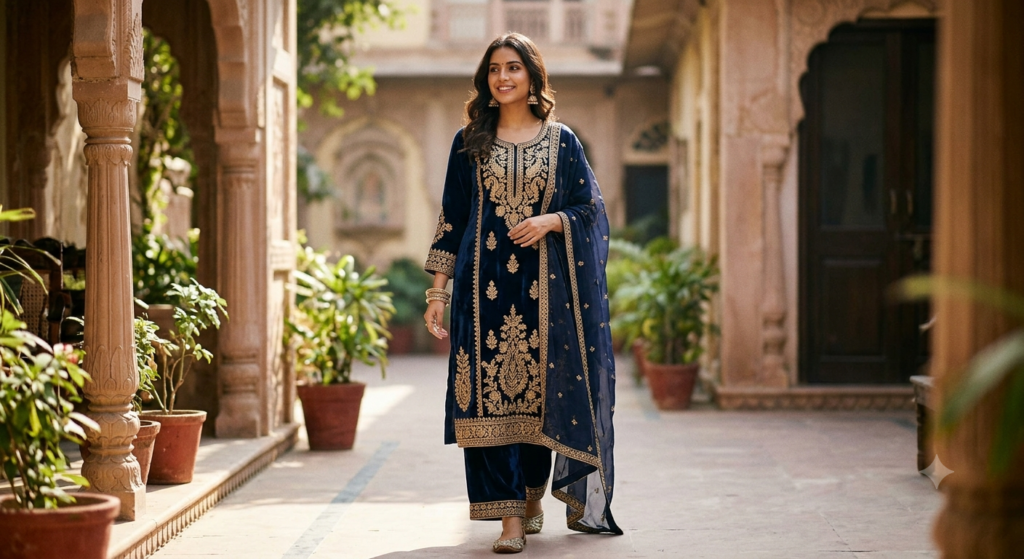
This guide explains practical ways to maintain velvet outfits, including an Embroidered velvet Anarkali suit, a Zari embroidery velvet suit, a Party wear velvet salwar kameez, and a Velvet salwar kameez for wedding celebrations.
Why Velvet Salwar Kameez Needs Special Care
Velvet has a distinctive surface created by closely packed fibers that produce its characteristic soft and slightly raised texture. This texture gives the fabric its luxurious appearance, but it can also make the material more sensitive to pressure, moisture, friction, and heat. Unlike ordinary cotton or synthetic fabrics, velvet can develop crushed areas when it is folded or pressed incorrectly for long periods.
A Velvet salwar kameez may also contain decorative elements such as zari, sequins, beads, stones, thread embroidery, pearls, or metallic borders. These embellishments require additional attention because aggressive washing or ironing can loosen them. Even a small mistake during cleaning can affect the overall appearance of an expensive outfit.
Velvet is particularly popular during colder months because of its warm and rich appearance. However, seasonal changes can introduce another challenge: moisture. Storing velvet in a damp environment may encourage unpleasant odors or even fabric damage. Keeping the outfit dry, clean, and properly ventilated is therefore essential.
Regular maintenance does not have to be complicated. The most important principle is to avoid unnecessary friction, heat, moisture, and pressure. When these factors are controlled, velvet can maintain its original texture and shine for years.
Understanding Your Fabric: Types of Velvet Used in Salwar Suits
Not every velvet fabric behaves in exactly the same way. Different varieties can have different textures, thicknesses, finishes, and fiber compositions. Understanding the material of your outfit is useful before deciding how to clean or store it.
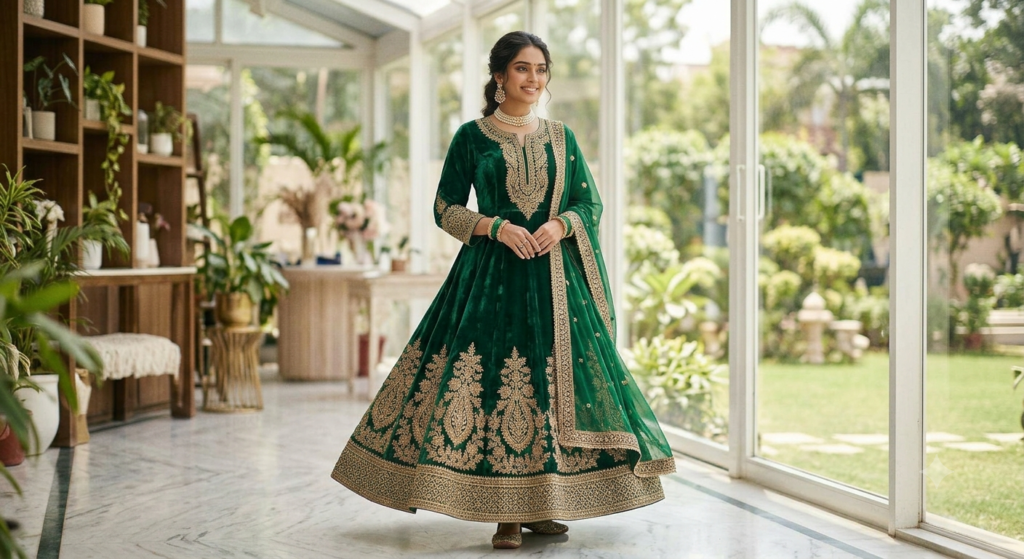
Cotton velvet generally has a soft and natural feel, while synthetic velvet may be more resistant to certain types of everyday wear. Stretch velvet contains fibers that give it additional flexibility and is often used for fitted garments. Crushed velvet has an intentionally textured appearance and requires particular care because its surface pattern can change when exposed to excessive pressure.
Some modern salwar suits may use blended velvet fabrics that combine different fibers. The care instructions can therefore vary from one garment to another. The manufacturer’s care label should always be checked before washing, ironing, or dry cleaning the outfit.
If your Velvet salwar kameez has embroidery or decorative work, the fabric itself is only one part of the care process. The embroidery material may have completely different cleaning requirements. This is particularly important for heavily embellished wedding and party outfits.
How to Store Your Velvet Salwar Kameez the Right Way
Correct storage is one of the easiest ways to preserve the appearance of velvet. After wearing your outfit, allow it to air out before placing it inside a wardrobe. This helps release body heat, moisture, perfume, and other odors that may have accumulated during use.
Avoid immediately putting a worn Velvet salwar kameez into a tightly closed plastic bag. Trapped moisture can create an unpleasant smell and may affect delicate fibers and embellishments. Instead, use a clean, breathable garment bag that allows some air circulation.
Hangers should be selected according to the garment’s construction. A padded hanger can help prevent unwanted pressure marks on the shoulders. Heavy velvet outfits should not be left on thin wire hangers for long periods because the weight of the garment can distort the shoulder area.
Folding may be necessary for heavily decorated outfits. In that situation, place soft, clean tissue paper between sections of the garment to reduce direct contact and pressure. Avoid placing heavy clothing on top of the folded velvet suit.
The wardrobe should also be clean, dry, and away from direct sunlight. Strong sunlight can gradually affect certain colors, especially rich shades such as maroon, navy, burgundy, green, and black.
Caring for Zari Embroidery Velvet Suit: Do’s and Don’ts
A Zari embroidery velvet suit combines two delicate elements: velvet and metallic embroidery. Zari can lose its shine or become damaged when exposed to unsuitable cleaning products, excessive moisture, or rough treatment.
One important rule is to avoid rubbing embroidered areas. If dust has accumulated on the surface, use gentle handling rather than aggressive brushing. A soft cloth can sometimes be used around the garment, but direct pressure on delicate zari should be minimized.
Do not apply strong stain removers directly to metallic embroidery unless the product is specifically recommended for the fabric and decoration. Chemicals that are suitable for ordinary fabrics may react differently with metallic threads.
Another important precaution is to avoid unnecessary ironing over zari. High temperatures can affect decorative threads and may flatten the velvet underneath. When professional cleaning is necessary, inform the cleaner that the garment contains velvet and zari work.
After wearing the outfit, inspect the embroidery for loose threads, beads, or stones. Addressing a small problem early can prevent additional decoration from coming loose later.
Protecting Embellishments on Your Embroidered Velvet Anarkali Suit
An Embroidered velvet Anarkali suit can feature extensive work across the bodice, sleeves, skirt, neckline, and dupatta. Because the embroidery is often distributed across multiple areas, friction is a major concern.
When storing an Anarkali, avoid placing it directly against rough surfaces or garments with sharp hooks and exposed zippers. These can catch embroidery threads and cause damage when clothes are moved inside the wardrobe.
Pay particular attention to the lower portion of the Anarkali. The wide flare can brush against floors, furniture, or accessories while wearing it. Keeping the hem clean and checking it after every occasion can help prevent permanent stains.
If the outfit contains stones or beads, store it carefully so that the embellishments do not rub against one another. Tissue paper or a soft fabric layer can provide an additional protective barrier.
The dupatta should also be stored carefully. Avoid folding it repeatedly along the same line because decorative borders can develop pressure marks. Gentle folding and occasional repositioning can help preserve the fabric.
Best Practices for Washing and Dry Cleaning Velvet Outfits
Cleaning a velvet garment incorrectly can permanently affect its texture. For this reason, washing should never be treated like ordinary laundry. The first step should always be checking the garment’s care label.
Some velvet garments may require professional dry cleaning, while others may allow gentle hand washing. If the outfit contains zari, stones, sequins, heavy embroidery, or multiple fabric types, professional cleaning is generally the safer approach.
Avoid twisting or wringing velvet because mechanical pressure can distort the pile. If hand washing is specifically permitted, use cool or lukewarm water and a mild detergent suitable for delicate fabrics. The garment should be handled gently rather than scrubbed.
After cleaning, avoid hanging a heavy, wet velvet garment in a way that stretches its shape. Excess water should be removed carefully without twisting the material.
For expensive wedding outfits and heavily embellished Velvet salwar kameez designs, professional cleaning is usually preferable. Tell the cleaner about all embellishments and any specific concerns before the service begins.
How to Remove Stains from Velvet Salwar Kameez Without Damage
Stains should be treated as soon as possible, but rushing to remove them can sometimes cause more damage than the stain itself. The first step is to identify what caused the stain and whether the fabric has special embellishments.
For a fresh liquid spill, gently blot the area using a clean, absorbent cloth. Do not rub the stain because friction can push the liquid deeper into the fibers and disturb the velvet pile.
Avoid using household bleach or strong stain-removing chemicals without confirming that they are suitable for the particular fabric. A harsh chemical can cause discoloration, especially on dark or richly dyed velvet.
For oily or food-related stains, professional cleaning may be the safest option. This becomes even more important when the stained area contains embroidery or zari.
If you decide to use any cleaning solution, testing it on a hidden section is advisable when the care instructions permit such testing. However, valuable wedding garments and heavily embellished outfits are best handled by experienced professionals.
Ironing and Steaming Tips for a Wrinkle-Free Velvet Salwar Kameez
Direct ironing can flatten the raised surface of velvet and leave visible marks. For this reason, placing a hot iron directly onto the front of a Velvet salwar kameez is generally not recommended.
Steaming can be a gentler alternative when the garment’s care instructions permit it. Keep the steamer at an appropriate distance instead of pressing it against the velvet. Excessive moisture or heat should also be avoided.
When ironing is allowed, use the recommended temperature and place a protective cloth between the iron and the garment. Avoid pressing heavily over the velvet pile or decorative work.
The garment can also be hung properly and allowed to relax naturally after storage. Sometimes minor wrinkles disappear without requiring direct heat.
For embroidered velvet garments, avoid ironing directly over stones, beads, sequins, or zari. These details may be sensitive to heat and pressure.
Keeping Your Velvet Salwar Kameez with Heavy Dupatta in Shape
A Velvet salwar kameez with heavy dupatta requires additional care because the weight of the dupatta can affect both the fabric and its decorative borders. Heavy embroidery, zari, sequins, and other embellishments can make the dupatta significantly heavier than an ordinary scarf.
Avoid hanging a very heavy dupatta from a narrow hook for extended periods. The weight can cause stretching or place excessive pressure on specific areas. Folding it neatly and storing it separately can sometimes be a better option.
When wearing the outfit, avoid allowing the dupatta to drag across rough surfaces. Jewelry, handbags, and accessories can also catch delicate embroidery, so care should be taken while moving.
After an event, inspect the dupatta for stains, loose threads, or damaged embellishments. Prompt attention can prevent minor issues from becoming permanent.
Storage should also prevent the dupatta from being compressed under heavy clothing. Giving it sufficient space helps preserve its decorative border and overall shape.
Post-Event Care: Maintaining Party Wear Velvet Salwar Kameez
A Party wear velvet salwar kameez may be worn for several hours in crowded environments, making it more exposed to perfume, makeup, food, dust, and accidental spills. Proper post-event care is therefore important.
After returning home, do not immediately fold the outfit and place it in the wardrobe. Hang it in a clean, ventilated area for a short period so that accumulated moisture and odors can dissipate.
Check the neckline, sleeves, cuffs, and hem for makeup or food marks. These areas often experience the most contact during an event.
If there are no visible stains, gentle airing may be sufficient. If you notice a stain, avoid experimenting with aggressive cleaning products. A professional cleaner can determine the safest treatment.
Before long-term storage, ensure that the garment is completely dry and clean. Storing an unclean outfit for several months can make stains more difficult to remove later.
Preserving Your Velvet Salwar Kameez for Wedding for Years to Come
A Velvet salwar kameez for wedding celebrations is often more than an ordinary outfit. It may represent a special occasion, investment, or family memory. Proper long-term storage can help preserve its appearance for future celebrations.
Before storing a wedding outfit, have it professionally cleaned if necessary. Stains, perspiration, and cosmetic residue should not be left on the garment for months because they may become harder to remove.
Use a breathable garment cover rather than tightly sealing the outfit in ordinary plastic. Choose a cool, dry storage location away from direct sunlight.
If the outfit is heavily embroidered, periodically inspect it for loose threads or damaged embellishments. Early repairs are generally easier than trying to restore extensive damage later.
Avoid repeatedly folding the garment in exactly the same places. Changing the folding pattern occasionally can reduce permanent creases.
For especially valuable outfits, consider professional preservation services. This can be worthwhile when the garment contains delicate handmade embroidery or expensive decorative materials.
Velvet Kurta Care: Simple Tips to Extend Its Life
Velvet kurtas may be easier to maintain than heavily decorated salwar suits, but they still require careful handling. Regular brushing or rough cleaning should be avoided because it can affect the direction of the velvet pile.
After wearing a velvet kurta, allow it to air before storing it. If it has only been worn briefly and remains clean, immediate washing may not be necessary.
Use suitable padded hangers when possible. Make sure the wardrobe is not overcrowded because excessive pressure between garments can flatten the velvet surface.
Keep perfume and cosmetic products from directly contacting the fabric. Some cosmetic ingredients can leave marks, while alcohol-based products may affect certain dyes or finishes.
For everyday velvet clothing, simple preventive care can significantly reduce the need for frequent cleaning.
How to Prevent Color Fading in Velvet Kurta and Salwar Suits
Rich color is one of the most attractive features of velvet clothing. Deep shades such as wine, burgundy, emerald, navy, black, and royal blue can create a luxurious appearance, but they may require protection from excessive sunlight and unsuitable washing.
Direct sunlight should be avoided during long-term storage. Ultraviolet exposure can gradually alter fabric color.
When washing is permitted, avoid very hot water and strong detergents. Excessive heat and harsh cleaning agents can contribute to color loss or fabric damage.
Separate dark velvet garments from lighter fabrics when cleaning. If professional cleaning is required, choose a cleaner experienced in handling delicate garments.
Another simple precaution is to avoid unnecessary washing. Cleaning a garment more frequently than required can shorten its life. Airing the outfit after occasional use may be enough when there are no stains or odors.
Seasonal Storage Tips for Velvet Kurta and Salwar Kameez
Velvet is especially popular during winter and festive seasons, which means many people store their velvet clothing for several months after the season ends. Preparing the garments correctly before storage can help maintain their condition.
Before putting away a Velvet salwar kameez, make sure it is clean and completely dry. Inspect the garment carefully for stains, loose embroidery, missing stones, and damaged seams.
During humid weather, storage conditions deserve extra attention. Excess moisture can affect both fabric and embellishments. Keep the wardrobe dry and well maintained.
During summer, protect velvet from prolonged exposure to heat and sunlight. A breathable garment cover can provide protection while still allowing some air movement.
It is also useful to inspect stored velvet garments occasionally. This gives you an opportunity to identify moisture, odors, loose threads, or other issues before they become serious.
Common Mistakes to Avoid When Caring for Velvet Outfits
One of the most common mistakes is treating velvet like ordinary clothing. Scrubbing, twisting, excessive ironing, and machine washing without checking the care label can damage the fabric.
Another mistake is storing the garment while it is still damp. Even small amounts of trapped moisture can create unpleasant odors and potentially contribute to fabric problems.
Leaving velvet in direct sunlight for extended periods can also affect its color. Similarly, overcrowding the wardrobe can compress the pile and create unwanted marks.
Many people also ignore the embellishments when cleaning their outfits. A garment may have a fabric care requirement and a separate embroidery care requirement. Both should be considered.
Using household stain removers without checking their suitability is another risky practice. What works on cotton may not be appropriate for velvet.
Finally, avoid waiting until a special outfit is needed to discover that it has developed a stain, loose thread, or damaged embellishment. Regular inspection makes it easier to maintain your clothing collection.
Conclusion
A beautiful Velvet salwar kameez can remain elegant and luxurious for many years when it receives the right care. The key is to protect the fabric from excessive friction, heat, moisture, pressure, and direct sunlight. Proper storage, careful cleaning, gentle stain treatment, and suitable steaming or ironing methods can help preserve the original texture and color.
Special attention should be given to embellished garments such as a Zari embroidery velvet suit, an Embroidered velvet Anarkali suit, or a Velvet salwar kameez with heavy dupatta. Wedding and party outfits deserve additional care because their embroidery and decorative details can be particularly delicate.
With simple maintenance habits, your Party wear velvet salwar kameez or Velvet salwar kameez for wedding occasions can continue to look polished and beautiful long after the first time you wear it. Taking care of velvet is ultimately about preventing damage before it happens and giving the fabric the gentle treatment it deserves.